Designs vary depending on the brand and model. Some breakers are optimized for higher impact frequency, while others are engineered to deliver greater impact energy.
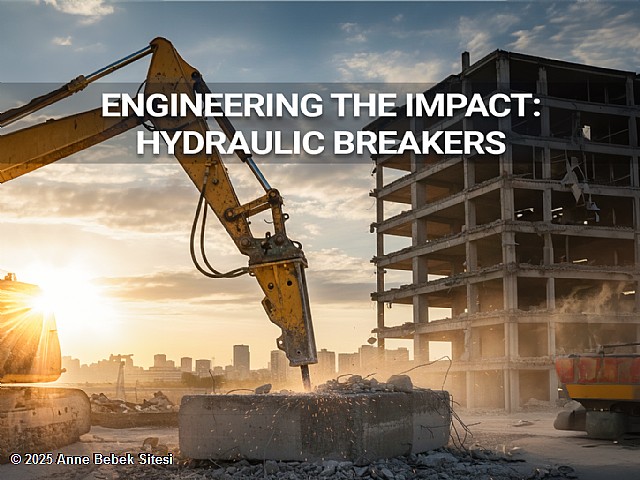
Engineering the Impact: Hydraulic Breakers
Hydraulic breakers are among the most commonly used attachments in today’s heavy equipment industry. They play a key role in construction, mining, road building, infrastructure development, concrete demolition, rock fragmentation, and recycling applications. Their primary purpose is to deliver high-impact energy onto rock, concrete, or other hard surfaces and break them according to the operator’s needs. The fundamental energy source that generates this impact is hydraulic pressure.
Modern hydraulic breakers are significantly more efficient and durable than previous generations. Understanding how these machines work is crucial for both manufacturers and operators, since proper selection, correct operation, and regular maintenance directly affect their service life. In this comprehensive article, we explain the structure of hydraulic breakers, how hydraulic energy is transformed into impact energy, and the functions of each major component—using clear but technically accurate language.
Basic Structure of Hydraulic Breakers
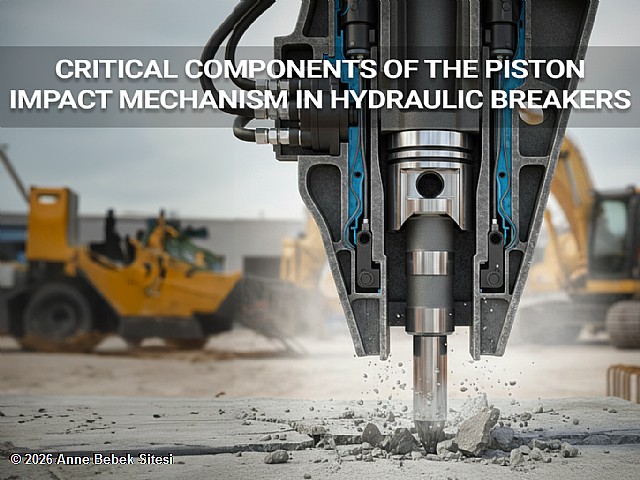
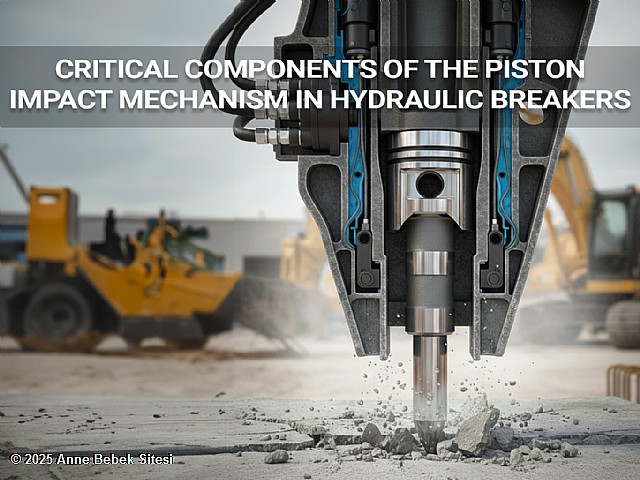
When simplified, a hydraulic breaker consists of several critical components working in synchrony: a piston moving back and forth, a tool that transmits impact to the ground, hydraulic valves that control piston motion, an accumulator that stabilizes impact energy, a housing that holds the entire system together, and a bushing that manages wear. Each of these components performs a dedicated function and contributes to overall system efficiency.
Designs vary depending on the brand and model. Some breakers are optimized for higher impact frequency, while others are engineered to deliver greater impact energy. Additionally, the hydraulic circuit configuration, the precision of internal mechanisms, and the durability of the housing material significantly influence performance. However, every hydraulic breaker must include five essential components:
To fully understand a hydraulic breaker, one must grasp how hydraulic pressure is converted into thousands of joules of impact energy. This transformation is based on the relationship between hydraulic pressure, piston mass, and piston speed.
The carrier machine (excavator, backhoe loader, mini excavator, etc.) supplies high-pressure oil through its hydraulic pump. This oil raises the piston by means of the breaker’s internal valve system. Once the piston reaches the upper position, the system briefly prepares for impact. Then the hydraulic valve shifts direction and forces the oil downward, pushing the piston rapidly toward the tool. During this downward stroke, the piston reaches extremely high velocities. Its kinetic energy is transferred directly to the tool tip, generating a single impact.
For all major components and every other hydraulic breaker spare part you need, visit www.jackhammerparts.com.
Working Fields of Hydraulic Breakers
Hydraulic breakers are among the most essential attachments used on heavy machinery today. They operate across a wide range of applications such as rock breaking, concrete demolition, road excavation, tunneling, demolition works, mining, and quarry operations. Converting hydraulic pressure into impact energy, these tools have become indispensable in modern construction and mining industries thanks to their durability, efficiency, and versatility. Various breaker models have been developed to meet the needs of different machine classes, site conditions, and material types.
Hydraulic breakers are generally classified into three main categories:
1) Large, high-impact breakers for heavy machinery
2) Light- and medium-duty breakers used on compact machines
3) Application-specific custom-designed models
Each category has its own features, advantages, and operational requirements. When selecting a breaker, factors such as the carrier machine’s hydraulic capacity, the working environment, the hardness of the material to be broken, and the operator’s job type must be considered.
Breakers for Heavy Machinery
Hydraulic breakers designed for heavy equipment—such as 20–60 ton excavators—prioritize durability and high impact energy. These breakers are intended for the toughest working conditions, including mining, quarrying, and heavy reinforced concrete demolition.
Typical application areas include: Mining and quarry operations, breaking large rock blocks, post-blasting rock downsizing, fragmentation of hard granite and basalt, opening tunnel entry faces. Models such as Rammer 4099, MTB 285 MR, Epiroc HB 7000, Soosan SQ1900, and Furukawa FXJ770 are well-known for their strength and reliability on extremely hard rock.
Tunneling and Infrastructure Projects
In tunneling and infrastructure works such as opening the tunnel face, preparing the front section for TBM operations, metro tunnels, water tunnels, and wastewater tunnels such as breakers with noise-reduced (silenced) housings are preferred, as low noise levels are particularly important in urban environments. For instance, the MTB 155 TN is a hydraulic breaker that is frequently preferred in tunnel projects.
Heavy Demolition Projects
For large-scale demolition operations including bridge demolition, dismantling of reinforced concrete factories, industrial plant demolition, and breaking large columns and beams, models like the Atlas Copco HB series or Indeco HP 3000–5000 class are preferred due to their combination of impact power and structural durability.
Road Construction and Layer Breaking
In road construction, hydraulic breakers are used for breaking old asphalt layers, fragmenting the rock layer beneath the subbase, and preparing stabilized roadbeds. In these applications, both impact frequency and single-blow impact energy play a critical role.
Bu haber 12.12.2025 12:16:29 tarihinde eklenmiştir.
Tool Types and Application Areas
Uç Tipleri ve Uygulama Alanları
Critical Components Of The Piston And Impact Mechanism
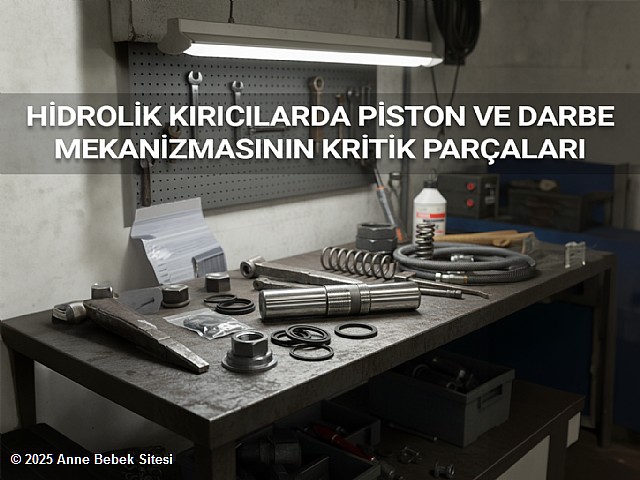
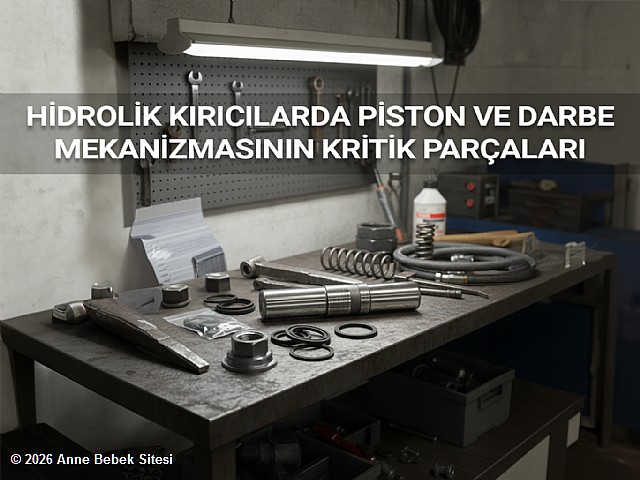
Hidrolik Kırıcılarda Piston Ve Darbe Mekanizmasının Kritik Parçaları
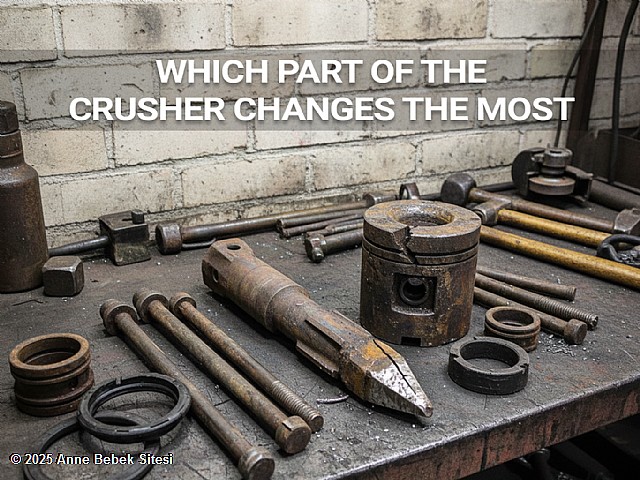
Which part of the crusher changes the most?
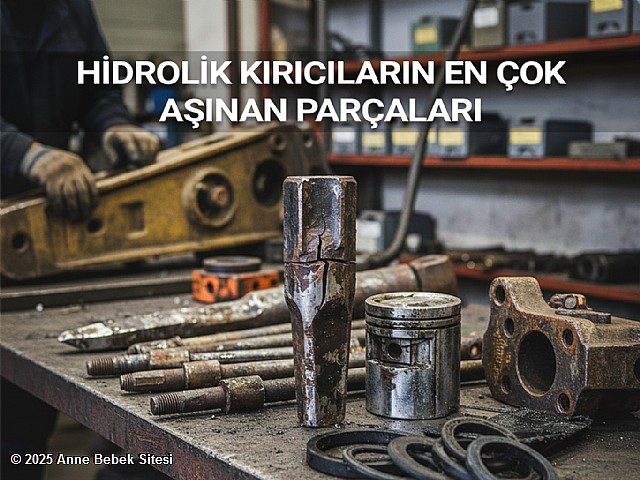
Hidrolik Kırıcıların En Çok Aşınan Parçaları

An Engineering Guide To Choosing The Right Breaker
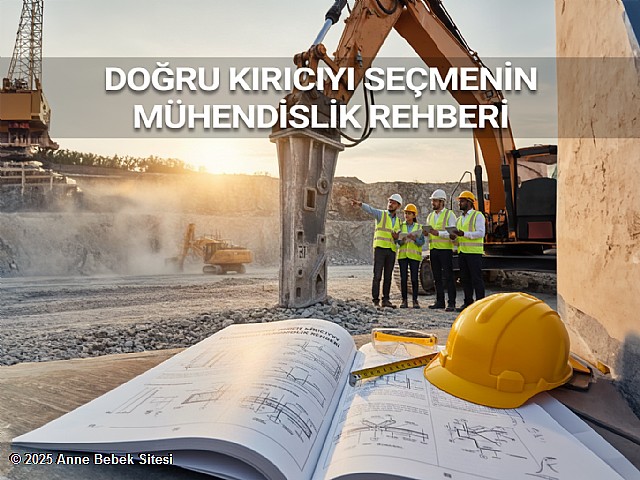
Doğru Kırıcıyı Seçmenin Mühendislik Rehberi

Engineering the Impact: Hydraulic Breakers
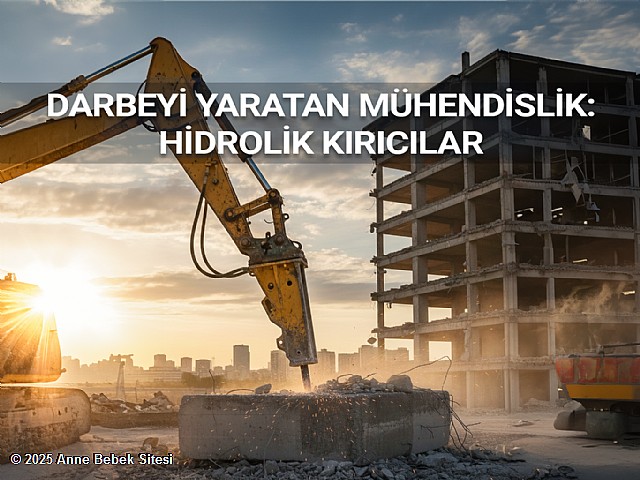
Darbeyi Yaratan Mühendislik: Hidrolik Kırıcılar
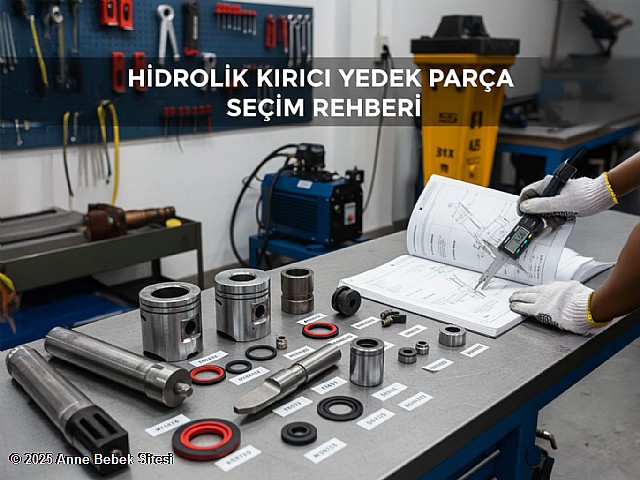
Hidrolik Kırıcı Yedek Parça Seçerken Dikkat Edilmesi Gerekenler

Ayaklarınızdaki Koku Nasıl Önlenir?

Sabahları Dinç Uyanmanın Püf Noktaları

Konjunktivit; Nedenler, Belirtiler, Önleme Ve Tedavi

Şifa Kaynağı Olan Bu Meyveyi Mutlaka Tüketin

Uyurken Sol Tarafınızda Yatmanızın Sağlığınız Üzerinde Kesin Bir Etkisi Var mı?

Çin Astrolojisine Göre Ben'lerin Anlamı Nedir?

Muzların Sağlık Sorunlarınızı Nasıl Kolaylaştırdığını Biliyor musunuz?



2026© Bu sitenin tüm hakları saklıdır.