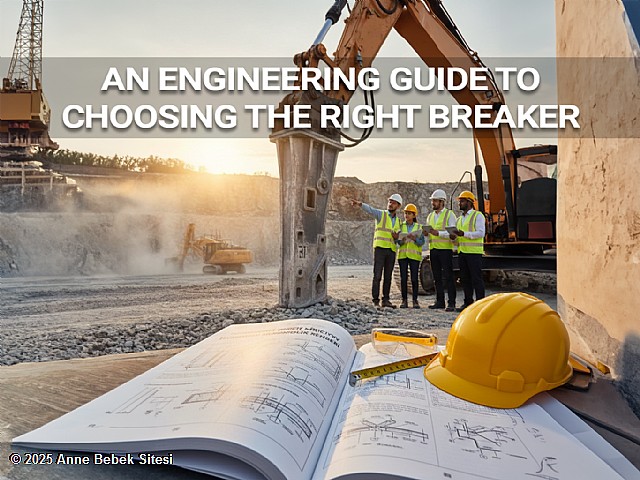
An Engineering Guide To Choosing The Right Breaker
One of the most critical factors determining hydraulic breaker performance is its compatibility with the carrier machine. Carrier machines may include excavators, backhoe loaders, mini excavators, demolition robots, or skid-steer loaders.
HYDRAULIC BREAKER SELECTION CRITERIA: AN ENGINEERING GUIDE TO CHOOSING THE RIGHT BREAKER
Hydraulic breakers are among the most critical attachments used in modern construction, mining, infrastructure, and demolition industries. By applying high-impact energy to hard materials such as stone, rock, and concrete, hydraulic breakers significantly increase operational efficiency, reduce labor requirements, and enhance overall machine performance. However, to achieve maximum efficiency and service life, selecting the correct hydraulic breaker is essential. An incorrectly selected breaker or incompatible spare parts may cause damage to the carrier machine, result in insufficient breaking performance, or lead to high maintenance costs. At www.jackhammerparts.com, you can find high-quality spare parts suitable for the required hydraulic breaker models. Therefore, multiple parameters must be evaluated professionally when selecting a hydraulic breaker.
1. Compatibility with the Carrier Machine
One of the most critical factors determining hydraulic breaker performance is its compatibility with the carrier machine. Carrier machines may include excavators, backhoe loaders, mini excavators, demolition robots, or skid-steer loaders. The technical specifications of the carrier machine must be carefully analyzed before selecting a breaker.
Machine Tonnage
Excavator operating weight is the primary parameter that determines the appropriate breaker size.
- 1–3 ton mini excavators → 70–150 kg breakers
- 3–8 ton machines → 150–400 kg breakers
- 8–20 ton excavators → 400–1200 kg breakers
- 20–40 ton excavators → 1200–3000 kg breakers
- Machines above 40 tons → 3000 kg and heavier breakers
Using a breaker that is larger than the recommended capacity can place excessive stress on the boom and swing bearings, cause instability, and increase fuel consumption.
On the other hand, using a smaller breaker than required may lead to insufficient breaking performance, prolonged operating time, and overheating issues.
Hydraulic Line Capacity
The maximum hydraulic flow rate (l/min) and operating pressure (bar) provided by the carrier machine are vital factors in breaker selection.
- If the breaker requires more flow than the machine can supply, overheating may occur and the hydraulic oil may degrade.
- If the breaker requires higher pressure than the machine can deliver, damage to the breaker valve or piston may occur.
- If a breaker is too small for the available hydraulic flow, impact energy decreases and operational efficiency is reduced.
Each hydraulic breaker model has an ideal operating flow and pressure range specified by the manufacturer. Proper selection must strictly comply with these technical parameters to ensure safe, efficient, and long-term operation.
Because hydraulic breakers operate at very high speeds and under extreme forces, many of their components wear over time and require regular maintenance and spare part replacement. Correct spare part selection not only extends the service life of the breaker but also ensures safe and efficient operation. A large proportion of performance losses, failures, and increased operating costs are caused by incorrect spare part usage, delayed maintenance, or the installation of incompatible components. For this reason, spare part selection is a strategic and technical process that is just as critical as selecting the hydraulic breaker itself.
Hydraulic Breaker Spare Part Groups
In general, hydraulic breaker spare parts are classified under the following main categories:
- Wear parts
- Functional – mechanical parts
- Hydraulic system components
- Sealing elements
- Housing and mounting components
Wear Parts
Wear parts are the components exposed to the highest loads during operation and therefore require regular replacement.
Tools
The tool is the primary component that directly transfers the impact energy of the breaker to the ground. There are different tool types designed for specific applications:
- Moil Point (pointed tool) → Rock breaking
- Chisel (flat / wedge tool) → Concrete breaking, directional demolition
- Blunt (flat tool) → Surface breaking
When should the tool be replaced?
Tool replacement is required when the tool becomes excessively thin, its length is reduced, its curvature is deformed, or cracks appear on the heat-treated surface. Failure to replace the tool at the correct time can reduce breaker performance by up to 40% and significantly accelerate bushing wear. At www.jackhammerparts.com , you can find high-quality breaker tools that are fully compatible with your breaker and carrier machine, offered at competitive prices. This ensures higher efficiency and a longer service life.
Inner and Outer Bushings
Bushings are components that hold the tool in the correct position and ensure proper alignment between the piston and the tool. All impact forces are initially transmitted to the bushings; therefore, they are classified as consumable parts. When bushings wear out, excessive tool play occurs, the piston operates out of alignment, the risk of piston failure increases, and overall breaker performance drops significantly. Bushing replacement is one of the most critical stages of hydraulic breaker maintenance. www.jackhammerparts.com offers the most suitable and high-quality bushings for your hydraulic breaker, ensuring reliable operation and extended component life.
Functional – Mechanical Components
Piston
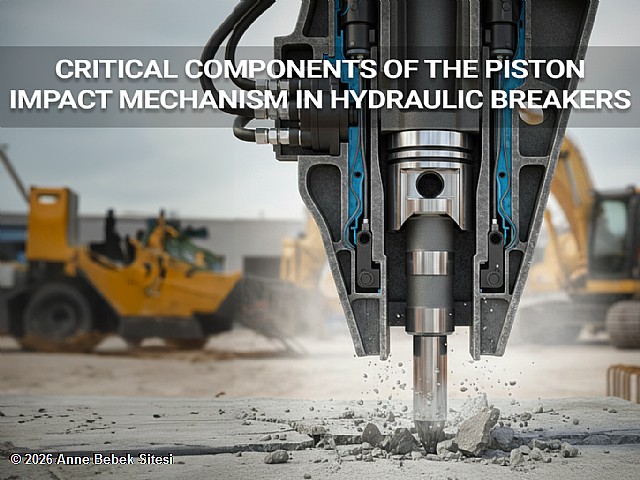
The piston is the heart of the hydraulic breaker. It converts hydraulic energy into mechanical impact force. Its mass, acceleration capability, and surface hardness directly determine breaker performance.
In which situations does piston damage occur? Piston damage typically results from operating with worn bushings, insufficient lubrication, low accumulator pressure, or running the breaker under side loads. Even minor scratches on the piston surface can lead to serious failures over time. Atwww.jackhammerparts.com , you can easily find the piston you need from a wide range of high-quality products.
Lower Housing and Upper Housing
Housing components hold the breaker assembly together and absorb impact forces. Cracks in the housing generally occur due to excessive pressure, improperly fitted sleeves, incorrect operating angles, or the use of worn bushings.
Tool Pins, Retaining Rings, and Keepers
These components secure the tool in place. Worn or loosened pins may cause the tool to fall out during operation, damage the bushing seat, and disrupt piston alignment.
Hydraulic System Components
Accumulator
The accumulator contributes to impact energy and balances pressure fluctuations. It contains nitrogen gas.
When does the accumulator require maintenance? Maintenance is needed when gas pressure drops, the diaphragm ruptures, impact performance decreases, or vibration levels increase. A low-pressure accumulator cannot sufficiently support the piston, resulting in power loss.
Valve Assembly
The valve assembly controls the direction of hydraulic oil flow and manages piston movement. Valve failures typically result from overheating, incorrect flow or pressure settings, contaminated oil, or inadequate filtration. A valve failure can completely stop breaker operation; therefore, valve selection is critically important. High-quality valve assemblies that extend service life can be found at www.jackhammerparts.com, which offers a wide product range.
Sealing Elements
Hydraulic pressure inside the breaker is maintained by sealing elements. These include O-rings, piston seals, accumulator seals, and housing retaining rings. Over time, seals may harden, leading to oil leakage and pressure loss. Replacement of seal kits is recommended at least once per year, especially under heavy-duty operation. Depending on your needs, you can find high-quality and cost-effective repair kits at www.jackhammerparts.com.
Diğer Haberler
![Tool Types and Application Areas]() Tool Types and Application AreasOne of the primary effects is impact energy transfer efficiency. When an incorrect tool is used, impact energy is reflected back into the breaker body instead of being transmitted into the material.
Tool Types and Application AreasOne of the primary effects is impact energy transfer efficiency. When an incorrect tool is used, impact energy is reflected back into the breaker body instead of being transmitted into the material.![Uç Tipleri ve Uygulama Alanları]() Uç Tipleri ve Uygulama AlanlarıPiston sızdırmazlık sistemi, hidrolik kırıcının darbe üretiminde en kritik unsurlardan biridir. Sızdırmazlık bozulduğunda piston hareketini düzenleyecek basınç farkı oluşmaz ve hız performansı düşer.
Uç Tipleri ve Uygulama AlanlarıPiston sızdırmazlık sistemi, hidrolik kırıcının darbe üretiminde en kritik unsurlardan biridir. Sızdırmazlık bozulduğunda piston hareketini düzenleyecek basınç farkı oluşmaz ve hız performansı düşer.![Critical Components Of The Piston And Impact Mechanism]() Critical Components Of The Piston And Impact MechanismThe piston, regarded as the heart of the impact system, works together with its surface hardness, machining quality, ring design, sealing elements, and in gas-assisted systems the accumulator diaphragm to generate high-frequency energy.
Critical Components Of The Piston And Impact MechanismThe piston, regarded as the heart of the impact system, works together with its surface hardness, machining quality, ring design, sealing elements, and in gas-assisted systems the accumulator diaphragm to generate high-frequency energy.![Hidrolik Kırıcılarda Piston Ve Darbe Mekanizmasının Kritik Parçaları]() Hidrolik Kırıcılarda Piston Ve Darbe Mekanizmasının Kritik ParçalarıDarbenin kalbi olarak kabul edilen piston, yüzey sertliği, işleme kalitesi, kullanılan segman yapısı, sızdırmazlık elemanları ve gaz destekli sistemlerde akümülatör diyaframı ile birlikte çalışarak yüksek frekansta enerji üretir.
Hidrolik Kırıcılarda Piston Ve Darbe Mekanizmasının Kritik ParçalarıDarbenin kalbi olarak kabul edilen piston, yüzey sertliği, işleme kalitesi, kullanılan segman yapısı, sızdırmazlık elemanları ve gaz destekli sistemlerde akümülatör diyaframı ile birlikte çalışarak yüksek frekansta enerji üretir.![Which part of the crusher changes the most?]() Which part of the crusher changes the most?The wear mechanism depends on multiple factors, including impact intensity, stone and moisture conditions, operating angle, and material type.
Which part of the crusher changes the most?The wear mechanism depends on multiple factors, including impact intensity, stone and moisture conditions, operating angle, and material type.






 Tool Types and Application AreasOne of the primary effects is impact energy transfer efficiency. When an incorrect tool is used, impact energy is reflected back into the breaker body instead of being transmitted into the material.
 Uç Tipleri ve Uygulama AlanlarıPiston sızdırmazlık sistemi, hidrolik kırıcının darbe üretiminde en kritik unsurlardan biridir. Sızdırmazlık bozulduğunda piston hareketini düzenleyecek basınç farkı oluşmaz ve hız performansı düşer.
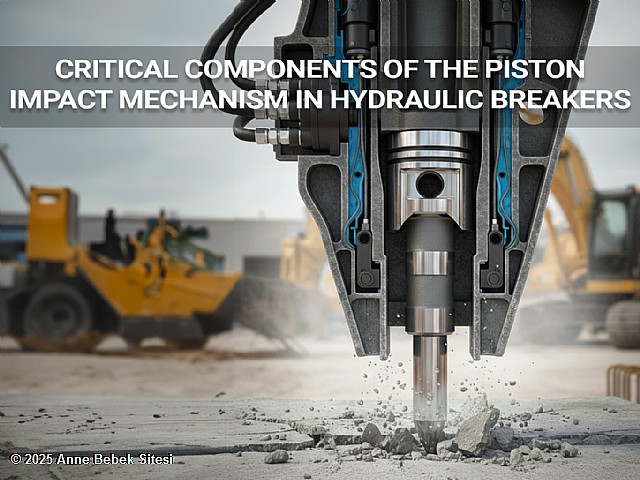 Critical Components Of The Piston And Impact MechanismThe piston, regarded as the heart of the impact system, works together with its surface hardness, machining quality, ring design, sealing elements, and in gas-assisted systems the accumulator diaphragm to generate high-frequency energy.
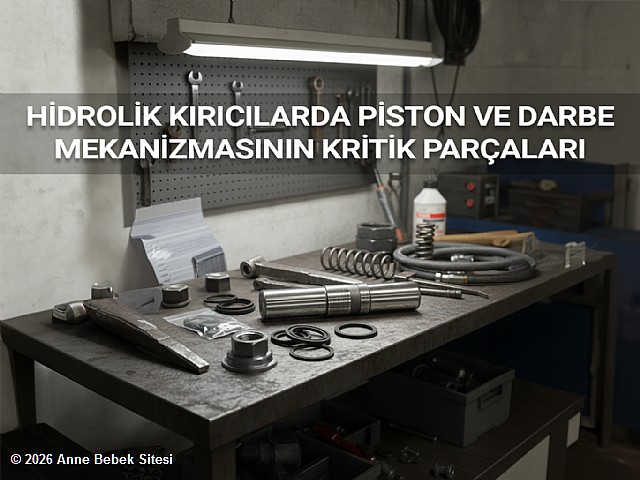
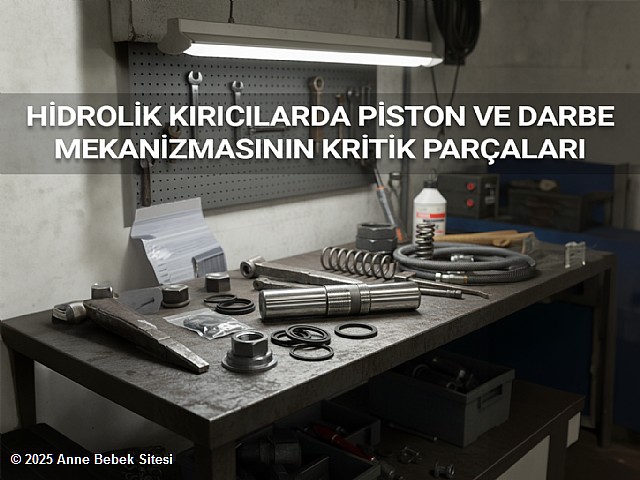 Hidrolik Kırıcılarda Piston Ve Darbe Mekanizmasının Kritik ParçalarıDarbenin kalbi olarak kabul edilen piston, yüzey sertliği, işleme kalitesi, kullanılan segman yapısı, sızdırmazlık elemanları ve gaz destekli sistemlerde akümülatör diyaframı ile birlikte çalışarak yüksek frekansta enerji üretir.
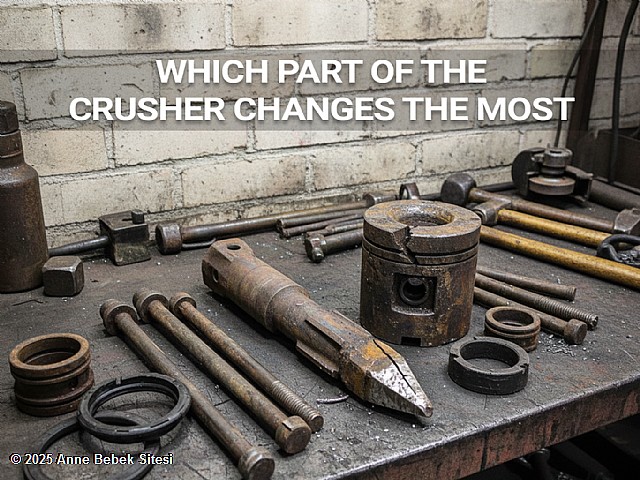 Which part of the crusher changes the most?The wear mechanism depends on multiple factors, including impact intensity, stone and moisture conditions, operating angle, and material type.